Journal Entry: The Magic of Carnegie Hall
Dear Virtuosi,
Carnegie Hall rewards trust, clarity, and intention.
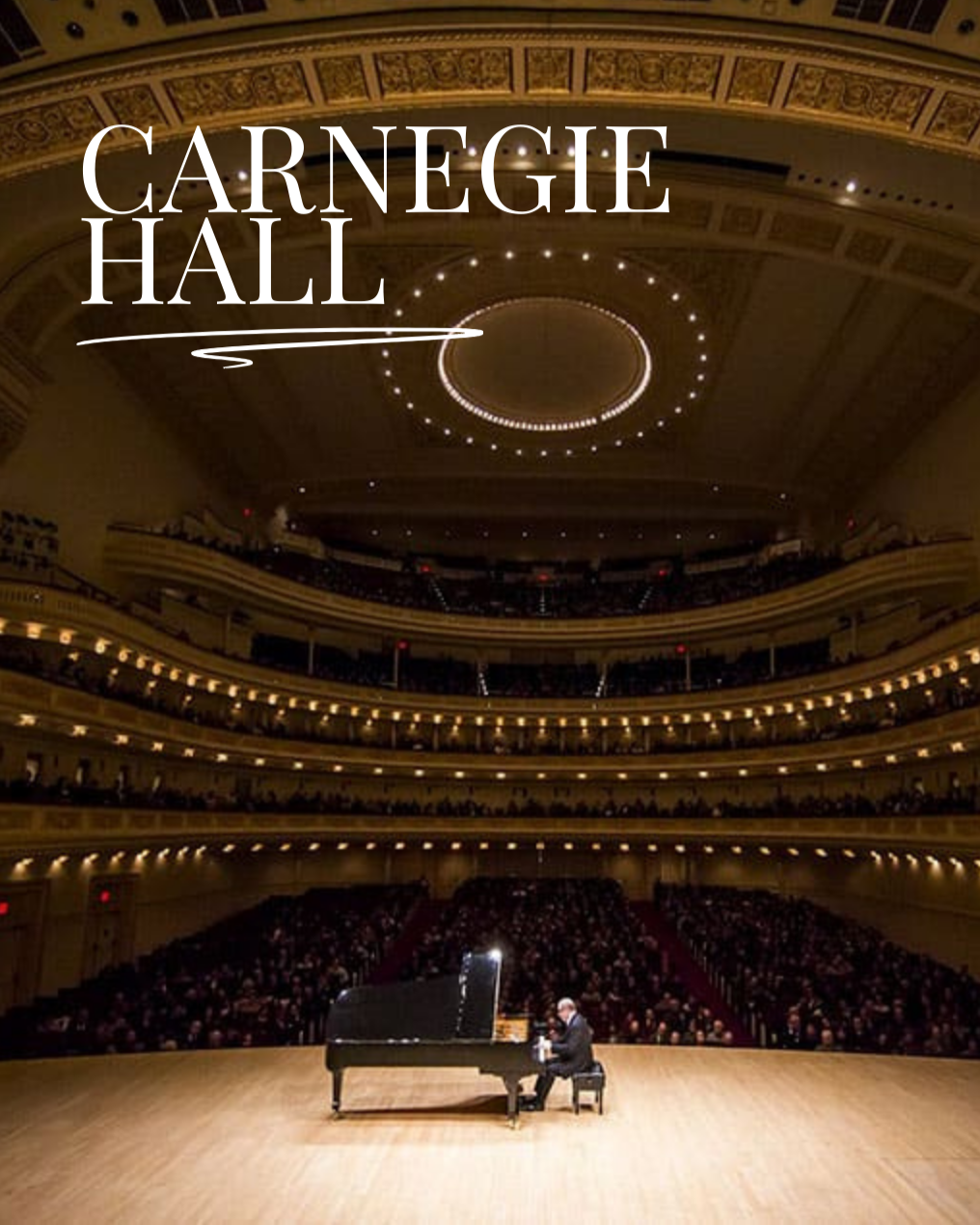
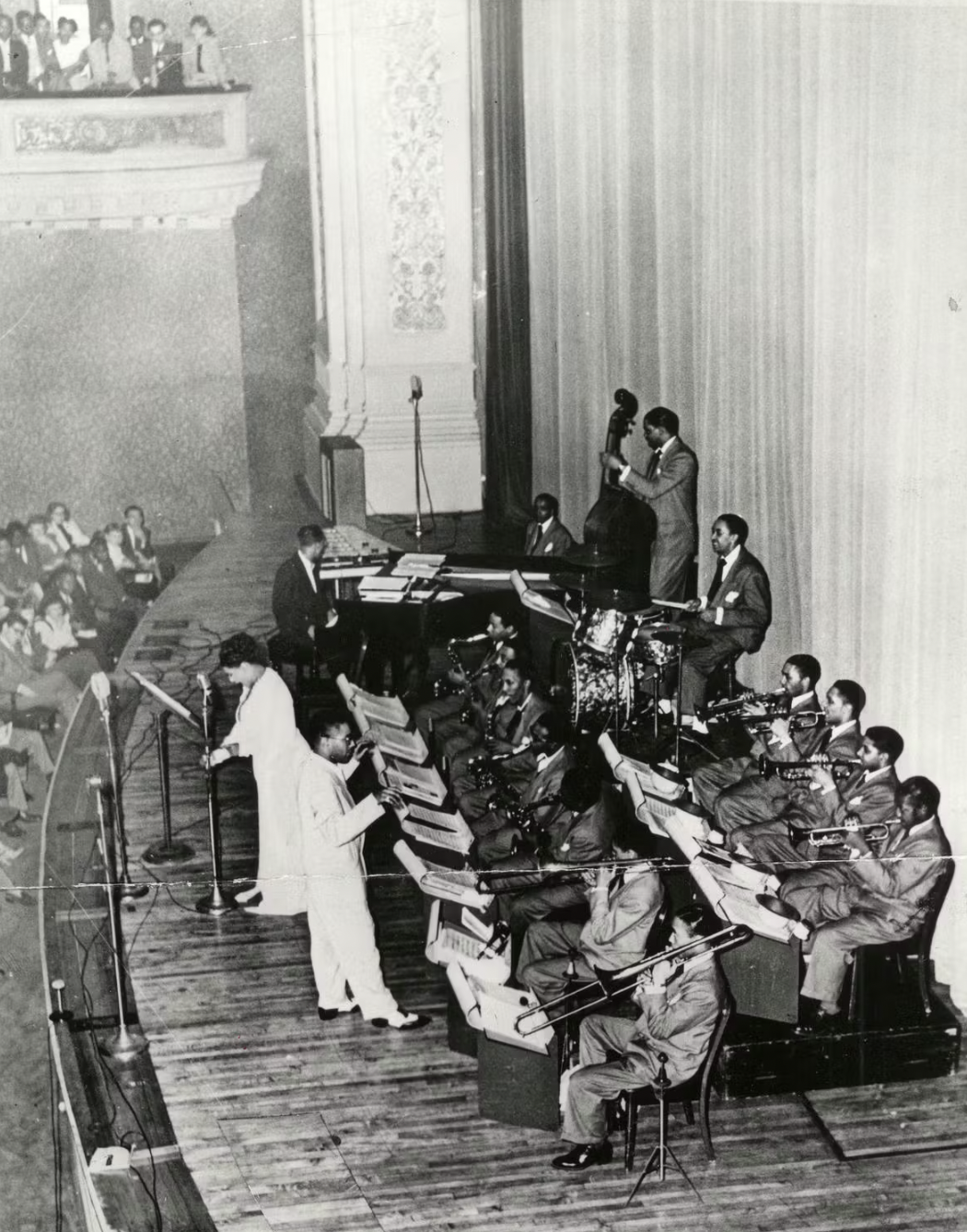
New York’s Carnegie Hall is a legendary stage known for its beautiful acoustics, rewarding singers who perform with trust, clarity, and intention. With icons like Ella Fitzgerald, The Beatles, Barbra Streisand, and Alicia Keys having graced this stage, the question remains…
Are you ready to perform here?
Carnegie Hall’s acoustics are famously revealing, letting the voice move effortlessly through the space while laying bare every detail of a performance. Artists such as Ella Fitzgerald, Joni Mitchell, The Beatles, Barbra Streisand, and Alicia Keys have all stood on this stage, meeting the hall’s uniquely intimate sense of grandeur. It is a space that rewards refined vocal mastery and presence, where subtle choices carry weight and the music leads the experience.
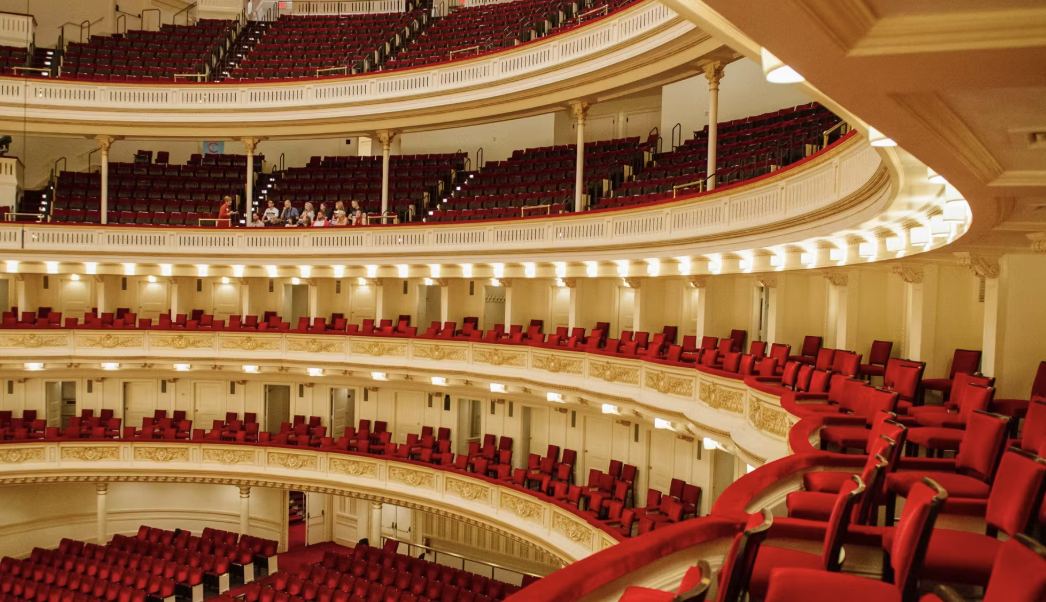
When architect William Burnet Tuthill designed Carnegie Hall, he placed acoustic clarity above decorative theatrical elements, intentionally eliminating features such as heavy curtains, highly ornate walls, and chandeliers that could disrupt sound projection. The hall’s smooth interior surfaces, elliptical shape, and domed ceiling work together to distribute sound evenly throughout the space, allowing even the softest notes to be heard with exceptional clarity across the entire hall.
Refined Vocal Control & Technique
“Carnegie Hall’s legendary acoustics are revealing and rewarding.”
Acoustician, engineer, and architectural consultant J. Christopher Jaffe has called it “the acoustic crown jewel of American concert halls.” Carnegie Hall’s acoustics are globally renowned for producing a warm and balanced sound, often described as “ringing” with remarkable clarity. However, Carnegie Hall’s acoustics are famously unforgiving - every breath, vibrato wobble, and pitch drift is audible.
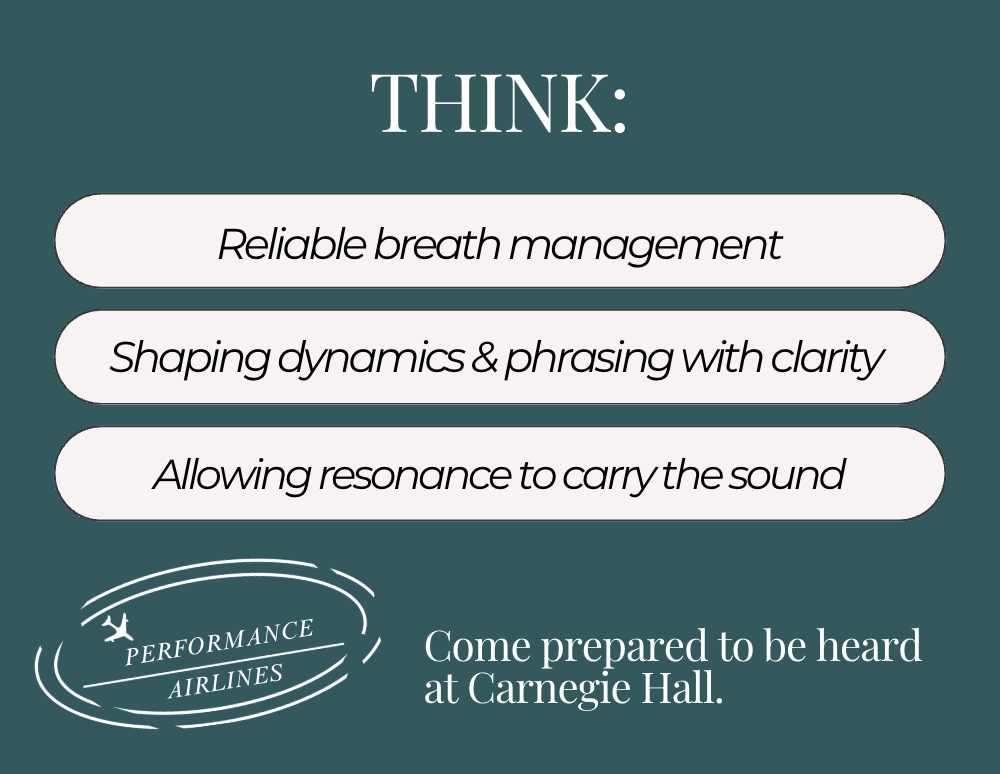
Come prepared to:
Have steady, consistent breath management
Approach dynamics, articulation, and expression with precision and intention
Using smart resonance strategies to fill the space
Singing in this space requires a high level of musical intelligence and vocal control, where dynamic control, stylistic awareness, expression, and precision are fully exposed, and even the quietest sound can be heard clearly across the hall.
Commanding Stage Presence
“In the absence of excessive showmanship, the voice must take precedence.”
Carnegie Hall performers don’t rely on dancers, pyrotechnics, or elaborate visuals. Instead, the singer’s presence, posture, emotional connection, and vocal intention are what fill the space, carrying the performance and holding the audience’s attention from the first note to the last.
Come prepared to:
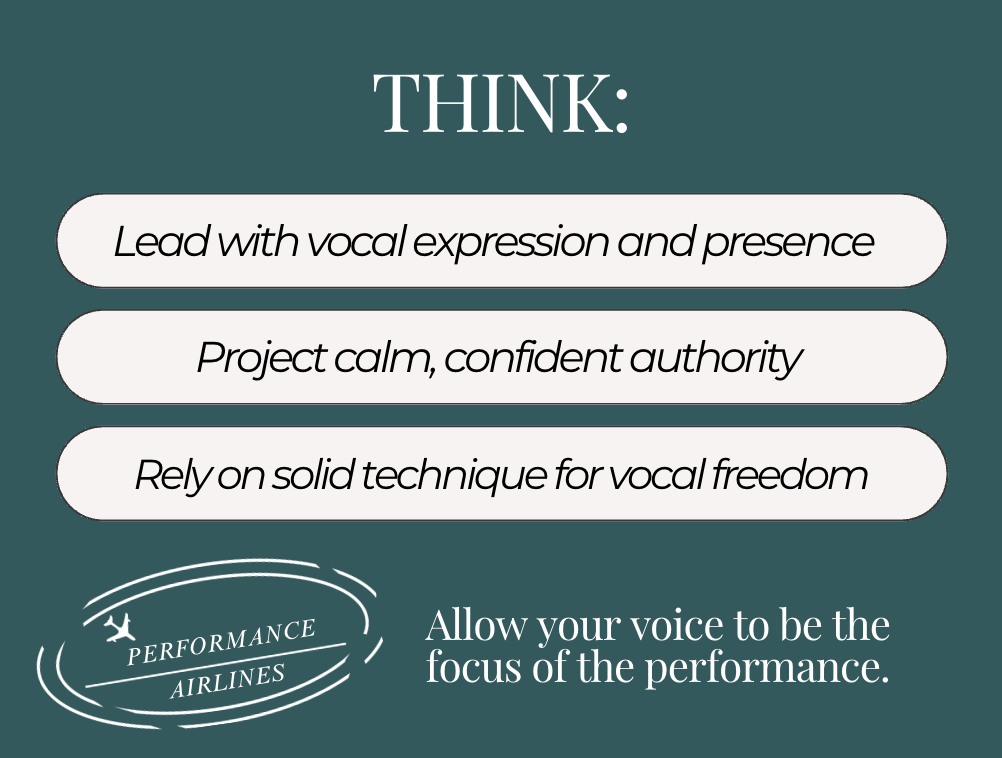
Make a statement with your vocal expression and stage presence
Be quietly confident and assertive
Maintain strong vocal technique to ensure the ability to maintain vocal freedom
YOU are the main focus – no pressure.
Mental Focus Under Prestige Pressure
“This stage has heard legends — are you ready?”
Given Carnegie Hall’s legendary performer history, singers must be ready to manage the pressure that comes with stepping onto such a prestigious stage. The hall has welcomed an extraordinary range of artists – from classical opera singers like Renée Fleming, to crooners like Tony Bennett, rock bands such as The Beatles, and soulful performers like Stevie Wonder – each bringing their own sound into the space.
Come prepared to:
Use performance anxiety tools to soothe the nerves
Trust your preparation and vocal technique
Stay grounded and present